Residential projects rarely come with the complexity of a public building or a large commercial scheme. There are fewer stakeholders, fewer regulations, and fewer layers of approval. Yet the best private houses can be among the most demanding projects an architect or designer undertakes because every detail is personal. That’s why award-winning door hardware specification is a game-changer on residential projects.
A Home that Balances Heritage and Individuality
That was certainly true at Overdale, a substantial Victorian house with sweeping views of Ilkley Moor that has recently undergone a complete refurbishment. The brief was ambitious but carefully balanced: preserve the building’s historic character while creating a contemporary family home with warmth, individuality and a strong sense of fun.
The result is a house where heritage detailing sits comfortably alongside hidden doors, a basement pub and minimalist contemporary joinery. Much of that success comes down to the consistency of the detailing and materials palette throughout the project, including the architectural ironmongery.
Where Heritage Meets Horizon
Em-B Solutions worked closely with interior designer Bess Sturman to develop a bespoke hardware package to support the broader design concept, titled Where Heritage Meets Horizon. The phrase neatly captures the tension at the centre of the project: respect for the Victorian proportions and craftsmanship of the original building combined with a more contemporary architectural language in the newer spaces, where the emphasis shifts towards horizontal lines, openness and the surrounding landscape.
It is easy to underestimate the role hardware plays in achieving that sort of continuity.
Architects and designers spend considerable time thinking about flooring, lighting, glazing and joinery, but ironmongery is often the one element that occupants handle constantly after handover. It has a tactile presence within a building that is difficult to replicate through other materials. Poorly judged hardware can undermine an otherwise carefully resolved interior remarkably quickly. At Overdale, the hardware specification became part of the house’s architectural language rather than simply a functional requirement.
A Complete Bespoke Hardware Package
Em-B designed and supplied a complete bespoke Imperial Bronze door hardware suite, including knurled levers, hinges, closers, cabinet fittings and pull handles, all carefully coordinated throughout the property. The warm bronze tones work comfortably within both halves of the design approach. Against reinstated Victorian features such as tall doors, cornicing and panelling, the finish feels rooted in the building’s heritage. Within the contemporary extension, the same material palette introduces warmth and texture to more restrained detailing.
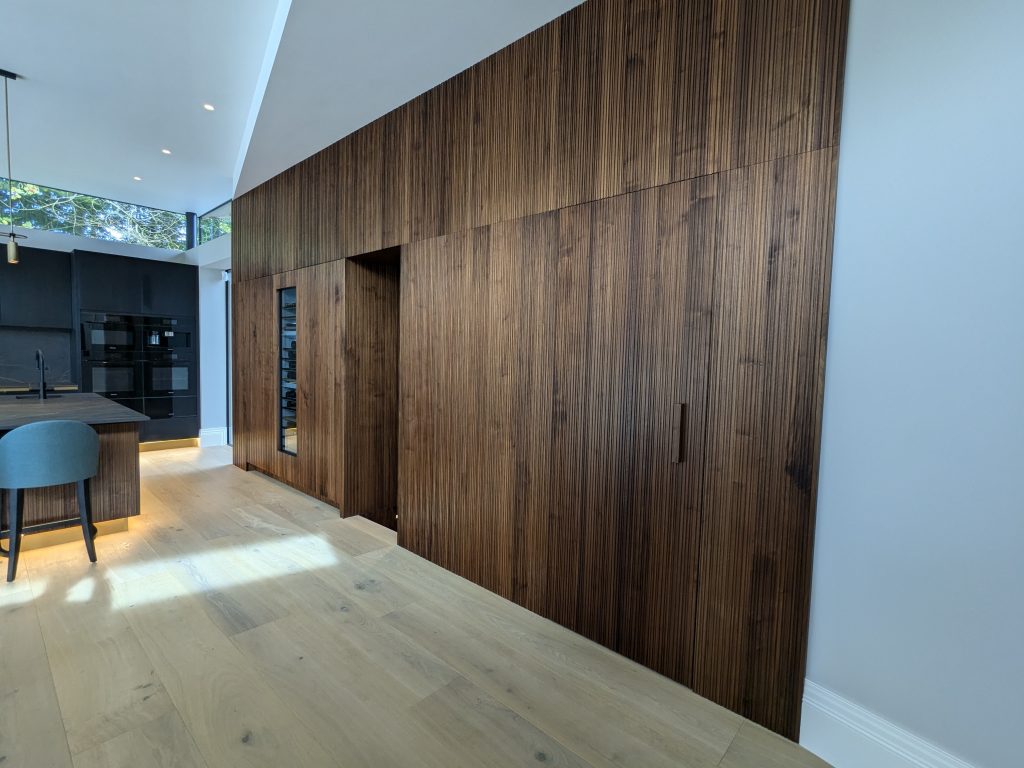
There is enough consistency across the hardware package to unify the house visually, but sufficient variation in scale, detailing and application to avoid becoming formulaic. Bespoke knurled handles introduce texture and rhythm without appearing decorative for the sake of it. In the walnut kitchen, concealed hinges and finger pulls allow the joinery itself to take precedence.
Some of the most technically interesting details are also among the least obvious. Hidden doors appear throughout the property, integrated carefully into wall panelling and joinery. They are playful, certainly, but they also demonstrate the importance of collaboration between designer, joinery contractor and ironmonger. Secret doors are notoriously unforgiving details. The tolerances are tight, the operation must feel intuitive, and the hardware must visually disappear without compromising reliability.
Collaborative Design
That balance between appearance and performance runs throughout the project.
According to Bess Sturman, Em-B became involved early in the process, working through samples, finishes and technical details as the scheme evolved. “The client gave us an open brief to create a new home from the bones of this traditional house,” she explains. “We know how important the hardware is to the look and, importantly, the feel of a home, so we consulted Em-B very early on to ensure we could get the right products for this unique project.”
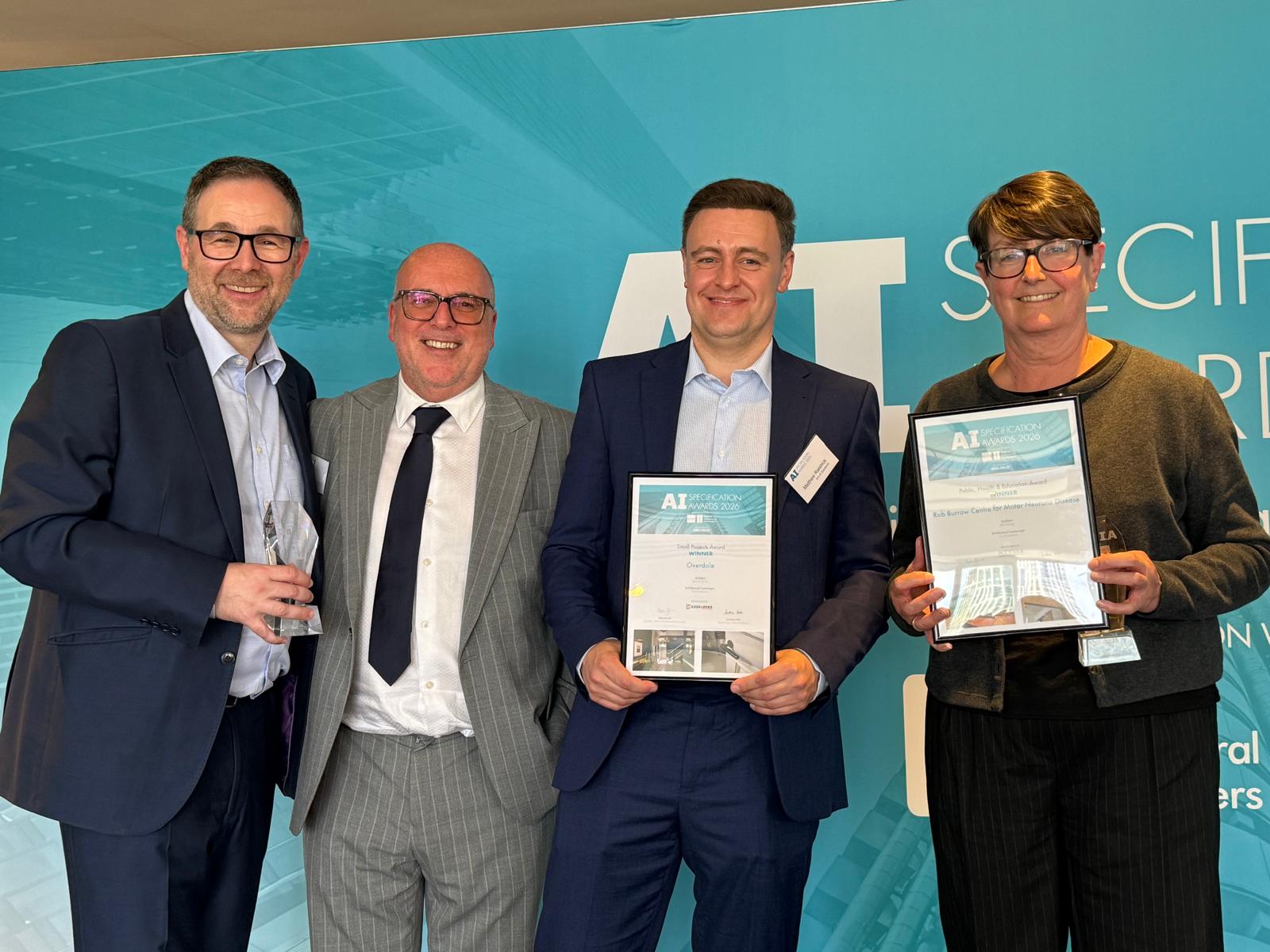
That early involvement of the architectural ironmonger on projects like this matters because residential hardware decisions are rarely isolated. The choice of finish affects joinery detailing, concealed systems influence wall construction, and handle proportions change the visual weight of doors and cabinetry. These interconnected architectural decisions cannot be made in isolation. The scheme’s combination of heritage sensitivity, technical detailing and contemporary living was recognised with a GAI/RIBA Specification Award in the Small Projects category.
Sturman also points to the practical side of the collaboration. “Em-B operated as a neat cog in a complex project, and their help and expertise on ironmongery was invaluable from early sampling stages through to delivery and snagging,” she says. “The Em-B was always helpful and willing to go the extra mile to ensure the design ethos of the project would be carried through with excellent functionality in the context of daily family use.”
Residential Hardware Done Differently
Residential projects often look beautiful immediately after completion. The more difficult challenge is designing a house that continues to work properly once real life begins to happen inside it. Overdale is a family home first and foremost. The hardware needs to withstand constant use while retaining the tactile and visual qualities that make the project distinctive. For example, solid bronze hardware was chosen not only for its looks but also for its longevity, and can be refinished over time rather than replaced. Existing joinery and original doors were retained wherever possible, allowing the refurbishment to preserve both material character and embodied carbon.
There is also a tendency in residential design discourse to separate functionality from atmosphere, as though technical performance somehow sits outside the architectural experience of a building. Projects like Overdale suggest the opposite is true. The success of the interiors depends precisely on how carefully those technical decisions have been resolved.
At its best, architectural ironmongery quietly reinforces the wider ambitions of a project. It shapes how spaces feel to move through and use every day. Overdale does that exceptionally well.
Get in Touch
The success of projects like Overdale lies in the detail. If you’re looking for support with the specification of architectural ironmongery for a residential project, we’d be pleased to help. Get in touch with our team.