The new Rob Burrow Centre for Motor Neurone Disease is a healthcare building that breaks the mould. They are often discussed in terms of efficiency, infection control and operational performance. All important, obviously. But occasionally, a project comes along in which the building’s wider purpose reshapes the design conversation entirely. The new Rob Burrow Centre for Motor Neurone Disease at Seacroft Hospital in Leeds is one of those projects.
The Project
Created by Leeds Teaching Hospitals NHS Trust in collaboration with patients, clinicians and the wider MND community, the £6.8m facility brings specialist MND care, research, therapy and support services together under one roof for the first time. The building was inspired by the vision of former Leeds Rhinos player Rob Burrow MBE, who was diagnosed with Motor Neurone Disease in 2019 at the age of 37 and went on to become one of the condition’s most visible and determined campaigners.
The Rob Burrow Legacy
Rob Burrow spoke openly about wanting people diagnosed with MND to receive care in “a sanctuary of hope, not fear”. That ambition shaped the centre from the outset. There is a growing body of evidence showing that the design of healthcare environments can directly influence patient wellbeing and recovery. NHS guidance on evidence-based healthcare design notes that factors such as natural light, noise reduction, intuitive circulation and access to calmer, less institutional spaces can improve patient experience and support better health outcomes. Research has also linked well-designed clinical environments with reduced stress, improved staff performance, and lower rates of patient falls and hospital-acquired infection. In projects such as the Rob Burrow Centre, that broader thinking is evident in every detail, from the openness of the communal areas to the tactile quality and ease of operation of the door hardware.
The Design Vision
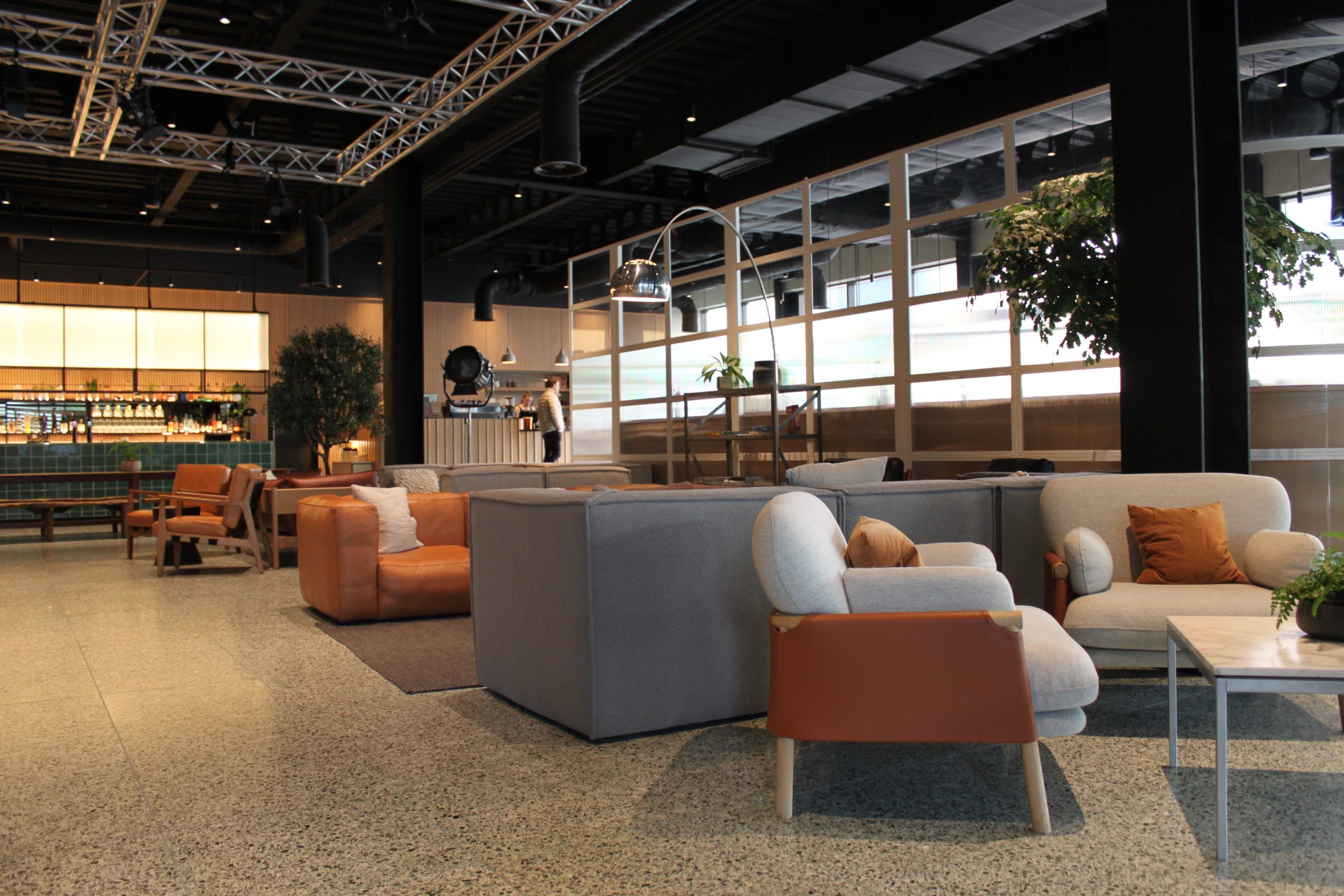
Architects Corstorphine & Wright responded with a building that feels markedly different from a conventional clinical environment. Natural light, long views, warm materials, and carefully considered circulation spaces create an atmosphere that is calm rather than institutional. There is a strong emphasis on dignity, independence and reducing stress for patients whose movement and communication may become progressively more difficult over time.
The Ironmongery Spec
That design intent extended right down into the architectural ironmongery package. Em-B Solutions supplied all door hardware and ironmongery for the project, working alongside main contractor I&G Group, Leeds Teaching Hospitals NHS Trust and manufacturers including ASSA ABLOY, dormakaba and Instinct Hardware.
In many healthcare settings, ironmongery specification is understandably driven almost entirely by practicality: stainless steel finishes, anti-bacterial surfaces, heavy-duty performance and ease of cleaning. The Rob Burrow Centre still required all of those things, but the project team also wanted the hardware to contribute positively to the character of the building.
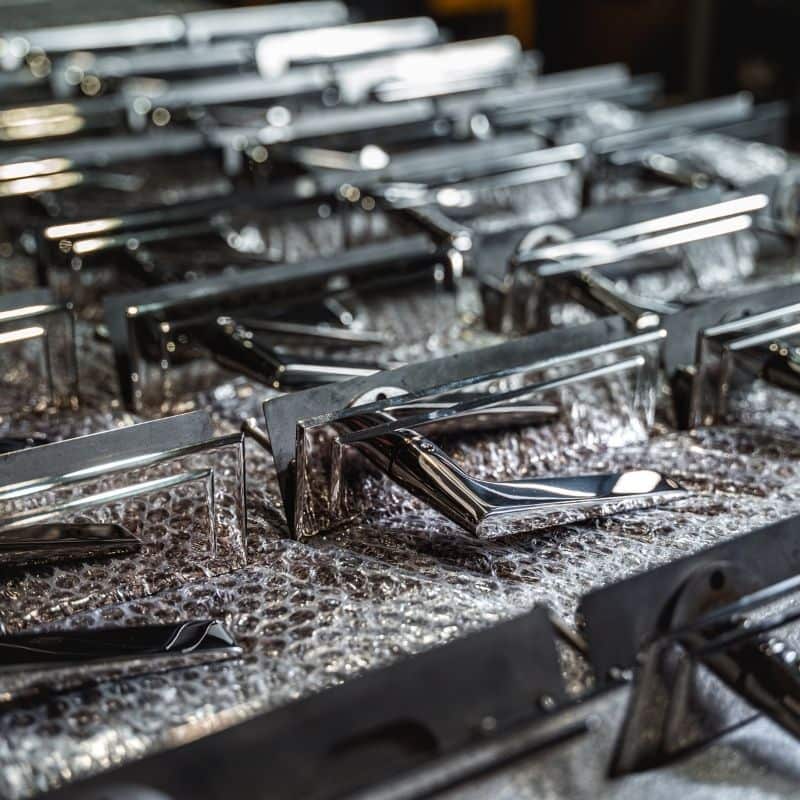
The result is a strikingly understated scheme built around bespoke black ironmongery manufactured by Instinct Hardware. Set against tall oak veneer doors with generous vision panels, the dark finishes create contrast and visual consistency throughout the building. It gives the centre a sense of identity that feels considered rather than clinical.
Importantly, none of that came at the expense of performance.
Every component had to operate reliably under constant use while remaining easy to use for people with limited grip strength, reduced mobility or assisted movement. Door closers were carefully calibrated. Automatic systems were integrated where required. Handles and fittings were selected not simply for appearance, but for tactility, accessibility and ease of operation.
The detailing also reflects the realities of healthcare maintenance. Smooth lines minimise dirt traps and simplify cleaning. Materials were chosen for durability and long service life. The hardware package was designed very much around a “fit and forget” philosophy — reducing maintenance interventions while ensuring consistent operation over many years of daily use.
What the Project Means to Em-B
Being part of this project has meant a great deal to everyone at Em-B. The Rob Burrow Centre for Motor Neurone Disease is a project that has touched so many people, not just in Leeds, but across the country and the whole world. Rob’s story and his determination to improve the lives of others have inspired us all.
Philip Goldberg, Em-B Solutions MD
A Collective Commitment
That sense of collective commitment extended beyond specification and installation.
Working closely with ASSA ABLOY, dormakaba and Instinct Hardware, Em-B secured manufacturer support through discounts and product contributions, enabling the company to donate the ironmongery package free of charge to the scheme. In practical terms, that meant more of the money raised through the Leeds Hospitals Charity appeal could be directed towards patient care and support services rather than construction costs. It is the sort of contribution that rarely appears in glossy architectural magazines but says quite a lot about how projects like this actually come together.
Award-Winning Design
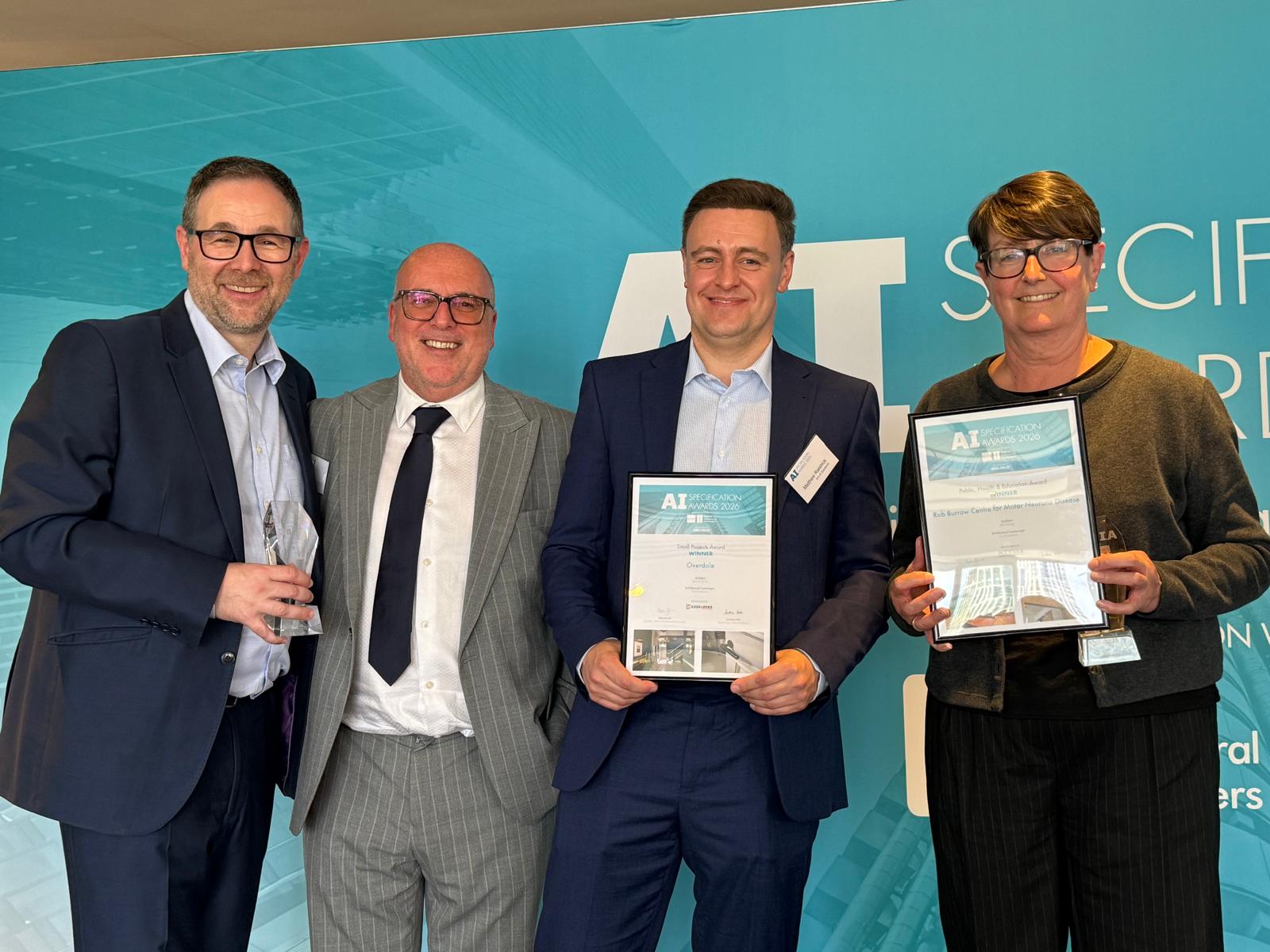
The centre has already received widespread recognition, including a GAI/RIBA Specification Award for Em-B Solutions in the Public, Health and Education category. The judges were clearly responding not simply to product quality but to the way the hardware specification supported the building’s wider architectural ambition.
That matters because healthcare design is increasingly moving beyond purely operational thinking. There is growing recognition that atmosphere, autonomy and emotional wellbeing have a measurable impact on patient experience. Buildings such as the Rob Burrow Centre demonstrate that accessibility and durability do not need to result in cold or anonymous spaces.
For architects and specifiers, it is a useful reminder that ironmongery is rarely just functional background detail. In the right hands, it can reinforce the architectural language of a building, support accessibility goals and contribute meaningfully to how a space feels to the people using it every day. The Rob Burrow Centre does that exceptionally well, one of the reasons why Em-B won a prestigious GAI/RIBA Specification Award for the project.
Get in touch
For more information about Em-B Solutions’ healthcare ironmongery and access control expertise, get in touch.