In April 2025, the Terrorism (Protection of Premises) Act 2025, commonly known as Martyn’s Law, named after Martyn Hett, who was killed in the Manchester Arena attack, received Royal Assent. This legislation was introduced in response to the 2017 Manchester Arena attack, and its purpose is clear: to ensure public venues are better prepared to deal with potential terrorist incidents.
For the Responsible Persons of these buildings, the new law will introduce a statutory duty on preparedness and proportionate security. At Em-B, we are already supporting clients in understanding what Martyn’s Law means in practice and how they can prepare for its implementation next year.
What Is Martyn’s Law?
Martyn’s Law requires certain public premises in England, Wales, Scotland and Northern Ireland to take steps to reduce the risk of harm from terrorist attacks. The earliest likely commencement date for the implementation of Martyn’s Law is April 2027, giving organisations time to prepare.
What Premises Must Comply with Martyn’s Law?
The Act applies across and introduces a tiered system based on venue capacity:
Standard Tier (200–799 capacity)
This tier focuses on procedures rather than mandatory physical upgrades and states that responsible persons must:
- Notify the Security Industry Authority (SIA)
- Put in place proportionate public protection procedures
- Develop clear evacuation, invacuation and lockdown plans
- Ensure staff understand how to respond
Enhanced Tier (800+ capacity)
The emphasis in this tier is proportionality. A community hall, for example, will not be expected to implement airport-style security. But a major arena will face more robust requirements.
In addition to the Standard Tier, enhanced-tier venues must:
- Undertake formal risk assessments
- Implement reasonably practicable physical security measures
- Document and evidence security planning
- Demonstrate senior-level accountability
Why Doors and Access Control Matter in Martyn’s Law
The new law is ultimately about the movement of people outside, inside and around the venue, so doors and access sit at the centre of that response.
- Controlling entry
- Restricting access during an incident
- Enabling rapid evacuation
- Supporting lockdown or invacuation
Clearly, well-specified ironmongery, doors, and properly integrated access control systems will enable venues to act quickly and decisively to deliver all of these criteria in a hostile situation.
Lockdown Capability
In an emergency, the ability to secure entrances or internal zones within seconds is vital to help reduce harm to the public and staff. Electronic access control allows:
- Remote locking of perimeter doors
- Controlled release of specific escape routes
- Zoned compartmentation within large buildings
- Integration with alarm or public address systems
Controlled Entry
For enhanced-tier venues in particular, managing who enters a building is fundamental to compliance with Martyn’s Law. Access control supports, but does not replace, robust procedures, and this may involve:
- Secure entry points
- Card or fob access for staff areas
- Visitor management systems
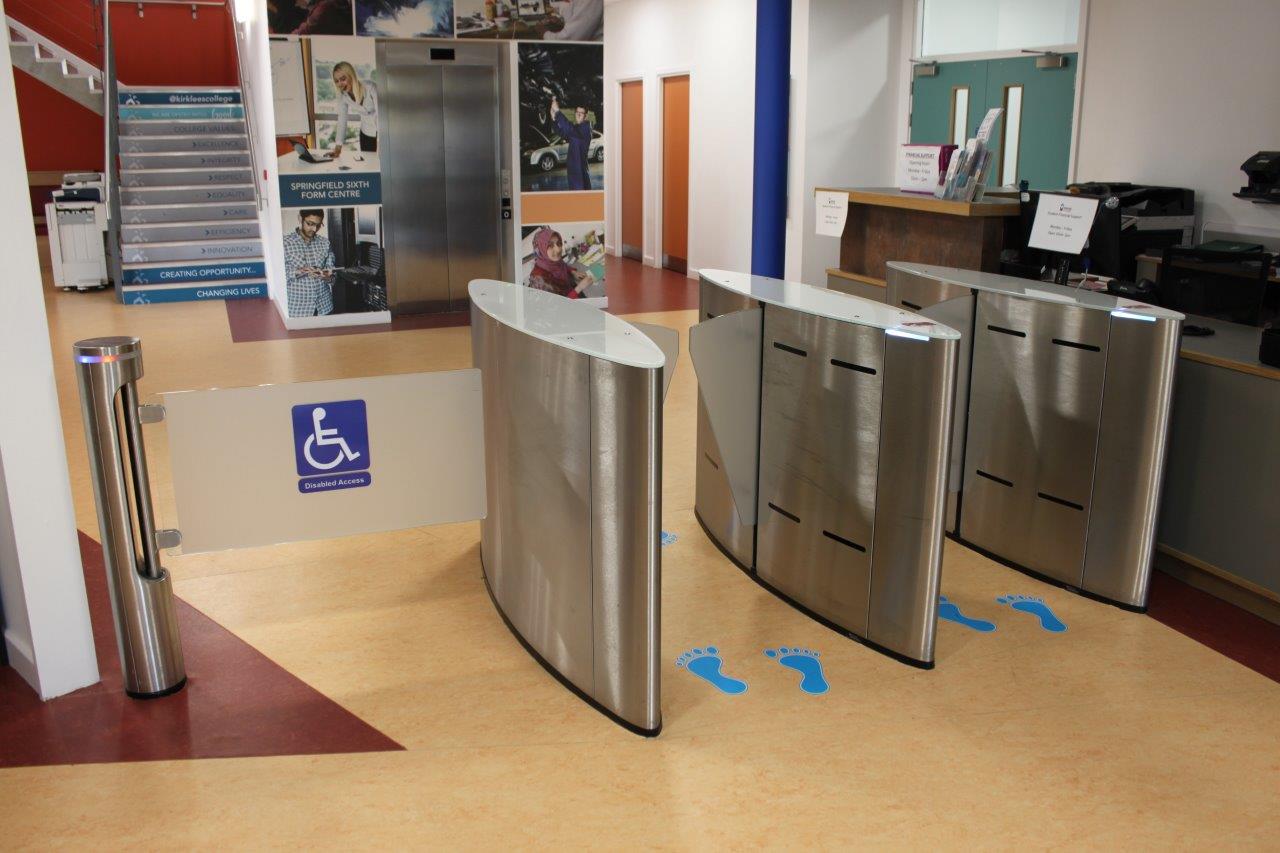
- Turnstiles or monitored reception control
Safe and Rapid Egress
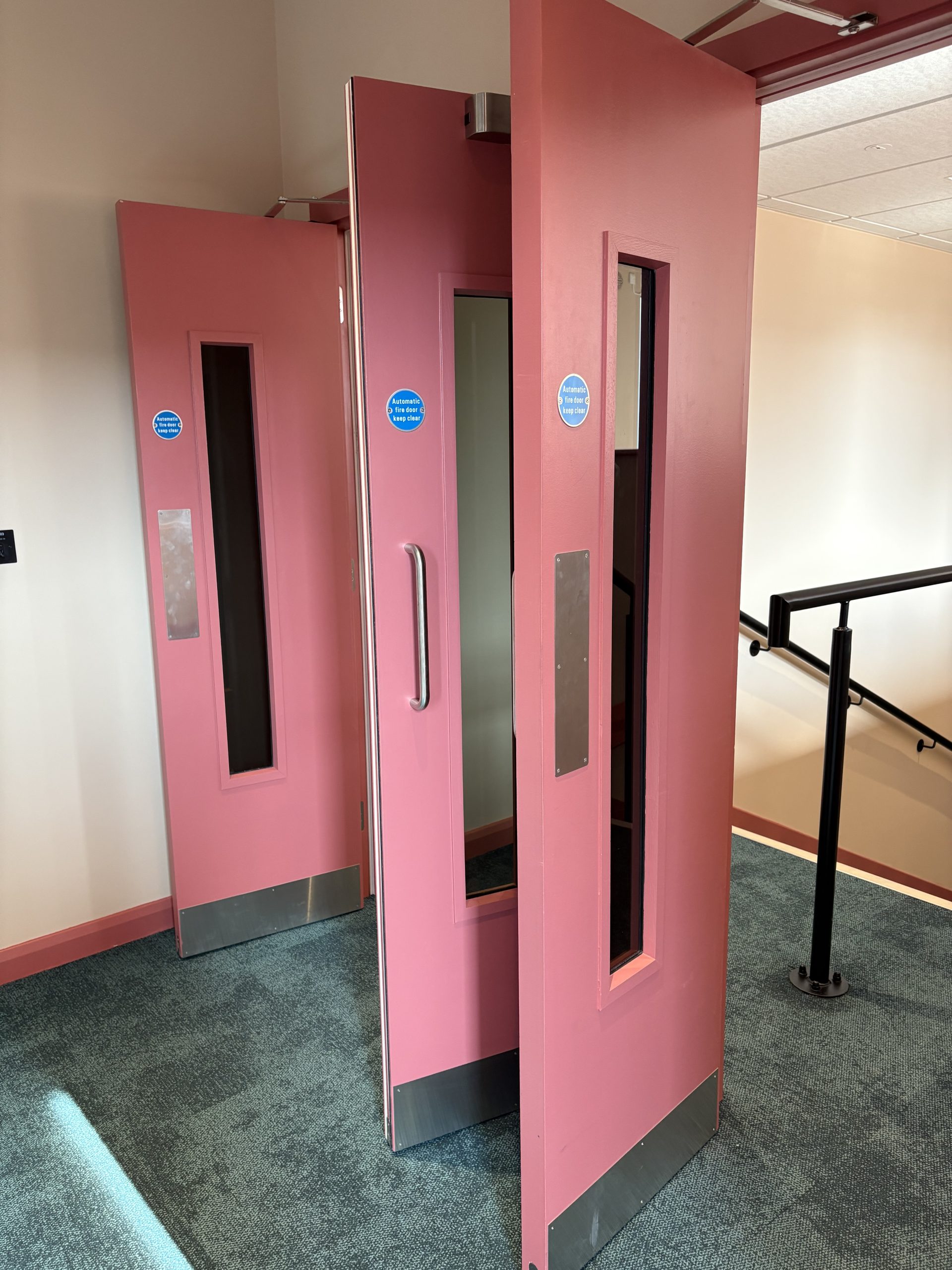
Security and safety need to coexist in a venue within the auspices of the Martyn’s Law. That means that panic hardware compliant with BS EN 1125 and emergency escape devices to BS EN 179 are still essential. It is also important to specify electrically controlled exit systems carefully to guarantee fail-safe operation and compliance with BS EN 13637. And it goes without saying that Martyn’s Law does not override fire safety regulations.
Balancing security and escape is a technical exercise that requires specialist knowledge, something heavily emphasised in industry guidance.
The Importance of Proportionate Specification
One of the central principles of Martyn’s Law is proportionality, and that principle should drive specification decisions. Not every venue needs full building lockdown systems, extensive CCTV networks, and reinforced security doors throughout. But every venue that falls under the scope of Martyn’s Law must be able to demonstrate that it has assessed the risk, considered appropriate measures and implemented reasonable safeguards.
This means that the correct approach must start with a site-specific survey and assessment. No two buildings are the same. Occupancy patterns, building layout, escape routes, and operational use all affect the required solution.
Martyn’s Law for Retrofit and Existing Buildings
Many venues affected by the new regulations are existing buildings, and retrofitting security and access control measures can present challenges such as:
- Heritage constraints
- Fire door integrity
- Accessibility compliance
- Integration with legacy alarm systems
Upgrading mechanical locks to electronic access control, adding compliant electrically controlled exit devices, or improving compartmentation strategies may all form part of a proportionate response. But each intervention must be assessed against fire, building, and equality legislation. The conversation needs to be compliance-led, not product-led, which is where talking early to a professional, experienced access control and door hardware expert comes into its own.
Education and Healthcare Environments
Schools, colleges and hospitals frequently fall within the scope of Martyn’s Law because of their occupancy levels. And due to their nature, these environments illustrate the complexity of compliance:
- Open access during peak hours
- Safeguarding requirements
- Multiple buildings and entry points
- After-hours community use
- In such cases, layered security may be appropriate:
- Controlled main entrances and perimeter
- Zoned internal access
- Lockdown functionality
- Clear evacuation routes
- Staff training
Documentation and Accountability
It is not enough to comply with Martyn’s Law; it is also vital to be able to prove compliance with their risk assessments and security measures. Em-B Solutions’ clients are increasingly asking for help with third-party certification, evidence of standards compliance, and product traceability and installation records.
Undoubtedly, this is part of the strengthened expectations around regulatory compliance post-Grenfell, and the new law will continue that trajectory. Specialist ironmongers and access control installers like Em-B play a role in providing documentation, technical advice, and compliant specifications.
How Em-B Supports Clients with Martyn’s Law
At Em-B, we approach Martyn’s Law in the same way we approach fire safety and accessibility compliance: methodically, proportionately and technically. Our process typically includes:
- Initial site assessment
- Risk-informed hardware review
- Evaluation of existing access control systems
- Integration review with fire safety measures
- Development of a tailored specification
- Installation by competent professionals
- Ongoing maintenance and support
We work alongside architects, facilities managers, and contractors to ensure that the new requirements align fully with security measures, operational needs, fire regulations, and accessibility compliance requirements. Every building presents a different risk profile, and the solution needs to reflect that.
Take Action Before Martyn’s Law Enforcement Begins
Martyn’s Law will probably not be enforceable until 2027, but Responsible Persons at applicable venues simply cannot afford to wait until then to understand their risk and exposure.
At Em-B, we provide structured Martyn’s Law readiness reviews that:
- Assess your building’s likely tier classification
- Identify vulnerabilities in door hardware and access control
- Review emergency egress compliance
- Recommend proportionate upgrades
- Provide clear, documented next steps
If you are responsible for a publicly accessible venue, now is the time to start the conversation. Book a Martyn’s Law site assessment with our specialist team.
Martyn’s Law is the Terrorism (Protection of Premises) Act 2025. It requires certain publicly accessible venues in the UK to assess the risk of terrorist attacks and put proportionate security measures and procedures in place to protect the public. The requirements depend on the size and capacity of the venue.
Although Martyn’s Law received Royal Assent in April 2025, it is not yet enforceable as the Government has indicated that enforcement is unlikely before April 2027. This implementation period will allow venues time to review risk assessments, procedures and physical security measures.
Martyn’s Law applies to publicly accessible premises with a capacity of 200 or more people. Examples include theatres and arenas, retail centres, hotels and conference venues, schools and universities, hospitals, places of worship, and large hospitality venues. Private homes and small workplaces not open to the public are generally out of scope.
Not automatically. Standard-tier venues (200–799 capacity) are primarily required to implement procedures and training. Enhanced-tier venues (800+ capacity) must assess whether reasonably practicable physical security measures are needed. This may include upgrades to doors, access control or surveillance systems. The correct approach depends on the building’s layout, occupancy and risk profile.
Martyn’s Law does not override fire safety legislation. Any security upgrades, including access control systems or lockdown capabilities, must still allow safe, immediate emergency egress in accordance with fire regulations.