One of the challenges with sustainable door hardware is separating meaningful environmental improvements from marketing claims. Every specifier would probably agree that a genuinely sustainable product should offer more than a green logo on a datasheet. It should reduce environmental impact in a measurable way, while still delivering the durability, compliance and performance expected of a commercial hardware specification.
Architectural ironmongery occupies an unusual position within the sustainability conversation. It represents a relatively small proportion of a project’s cost and embodied carbon, yet it appears throughout every building. The cumulative impact of material selection, manufacturing methods, product lifespan and replacement cycles can therefore be significant.
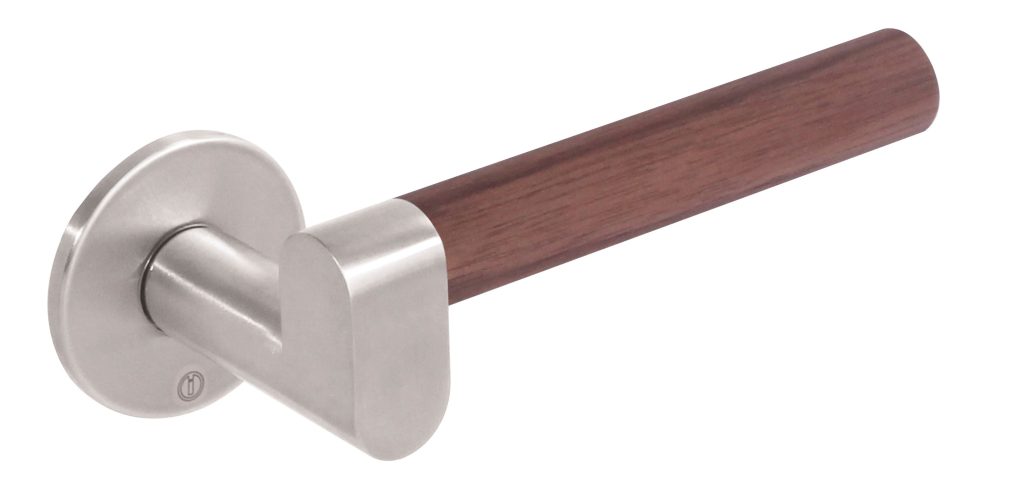
For years, much of the discussion has quite rightly focused on specifying products that last longer and require less maintenance. Increasingly, however, manufacturers are also looking at how products are made in the first place. Our Kupe Eco range is one example of how that conversation is starting to evolve.
Sustainable Door Hardware Starts With Materials
When people think about sustainable construction products, they often think about timber, insulation or structural materials, and door hardware rarely enters the discussion. Yet most architectural ironmongery relies on raw materials that require significant extraction, processing and transportation before they ever reach a building site.
One of the most effective ways of reducing environmental impact is therefore reducing the amount of virgin material required in the first place. The Kupe Eco collection is manufactured using high levels of recycled aluminium. Aluminium is particularly interesting from a sustainability perspective because it is 100% recyclable and can be recycled repeatedly without losing its core properties.
Aluminium has another advantage: it can be recycled repeatedly without losing its core properties. That means the same material can stay in use for decades, moving through multiple manufacturing cycles rather than relying on a constant supply of newly extracted raw materials. For specifiers looking to make practical sustainability improvements, that is a far more meaningful measure than an environmental claim on a datasheet.
Sustainable Products Still Need To Be Good Products
This is where some sustainability discussions become disconnected from reality.
Architects, contractors and building owners are not specifying door handles to save the planet. They are specifying products that need to work. A handle that fails prematurely, requires constant maintenance or needs replacing after a few years is not sustainable, regardless of the recycled content used to manufacture it.
That is why durability remains such an important part of the sustainability discussion.
The environmental impact of replacement is often overlooked. Every replacement product requires manufacturing, transport, packaging, installation and disposal of the original component.
For most specifiers, sustainability is not simply a question of what a product is made from. It is also about how long it lasts, how much maintenance it demands and whether it continues performing as intended year after year. A product that stays in service is almost always a more sustainable proposition than one that needs regular replacement.
The best sustainable products are rarely those that focus on a single environmental attribute. They are products that balance environmental considerations with long-term performance.
Why Architects Are Starting To Ask Different Questions
Five years ago, sustainability questions around architectural ironmongery were relatively rare. Today, they are becoming increasingly common. That shift is being driven by client ESG requirements, embodied carbon targets, BREEAM assessments, environmental reporting and responsible procurement policies.
Increasingly, specifiers want to understand where materials come from, how the products are manufactured, and whether environmental data is available as well as how long products are likely to remain in service.
And clients increasingly want evidence that sustainability has been considered throughout the specification process, even for products that historically sat outside environmental discussions.
Sustainable Door Hardware Is More Than Carbon
One of the mistakes sometimes made when discussing sustainable construction products is reducing the entire conversation to carbon alone. Carbon matters of course, but it is not the only consideration. Issues like resource efficiency, waste reduction, product longevity and adaptability all matter too.
Sustainability discussions often focus on recycled content, but lifespan matters just as much. Brass and bronze have been used in architectural ironmongery for centuries, and many examples remain in service today. That sort of longevity is difficult to ignore from an environmental perspective. Materials that can be maintained, refurbished and kept in use for decades reduce the need for replacement and make better use of the resources already invested in the building.
A recycled aluminium handle, a solid brass pull handle or a bronze lever set may have different environmental stories at the point of manufacture. What they share is the potential to remain in service for a very long time. From a sustainability perspective, that is often where the greatest benefit lies.
The same principle applies during refurbishment. Hardware that can be retained, refreshed or adapted rather than stripped out and replaced helps reduce waste and makes better use of the resources already invested in the building. It’s one reason why lifecycle thinking is becoming increasingly important across construction.
The Sustainable Direction of Travel
The architectural ironmongery sector is arguably somewhat behind the curve compared to some other areas of construction when it comes to sustainability. But that is beginning to change: Environmental Product Declarations are becoming more common, and manufacturers are publishing more environmental data. Specifiers are asking more questions about sourcing, manufacturing and lifecycle impact. At the same time, product development is starting to focus on reducing environmental impact without compromising performance.
The Kupe Eco range sits within that wider shift.
Not because it claims to solve sustainability on its own, but because it demonstrates that material selection, manufacturing and environmental impact are becoming legitimate considerations within architectural ironmongery specification.
For an industry that has traditionally focused on compliance, security and performance, that represents an important change in direction.
This Article Is Part Of A Series On Sustainable Hardware
This article forms part of Em-B’s series exploring sustainability in architectural ironmongery specification. Other articles examine lifecycle thinking, value engineering, durable hardware for high-traffic environments and the growing role of refurbishment and retrofit within sustainable building design.
The Guild of Architectural Ironmongery has also produced a Specifiers’ Guide to Ironmongery and Impact on the Environment
Get in Touch
Sustainability is becoming an increasingly important consideration in architectural ironmongery specification, but environmental performance should never come at the expense of durability, compliance or usability.
To find out more about the Kupe Eco range and how sustainable hardware can be incorporated into commercial projects, contact the Em-B team.
FAQs
Sustainable architectural ironmongery is hardware designed to reduce environmental impact through factors such as recycled materials, responsible manufacturing, durability, long service life and reduced replacement requirements.
Yes. Recycled aluminium door handles can provide the same performance, durability and compliance as products manufactured from virgin material, depending on their design and specification
Aluminium can be recycled repeatedly without loss of performance. Existing material can remain in use through multiple manufacturing cycles and reducing demand for virgin raw materials.
Costs vary by product and manufacturer. However, many sustainable hardware products are increasingly being specified because of their environmental credentials alongside durability and long-term value.
Architects can consider recycled content, product lifespan, maintenance requirements, environmental data, responsible sourcing and whole-life performance when selecting architectural ironmongery.