Martyn’s Law will impose new responsibilities on those who manage publicly accessible buildings. While much of the conversation focuses on procedures and training, the performance of doors, locks and escape hardware is central to how a building responds in practice.
Every response strategy, including lockdown, invacuation or evacuation ultimately depends on how doors behave. For Responsible Persons, that raises an important question: are your doors and access control systems capable of doing what your procedures require?
Why Martyn’s Law Doors Sit at the Centre of Compliance
Martyn’s Law is concerned with controlling movement: who can enter a building, how people move within it, how quickly areas can be secured, and how safely occupants can exit. All of these functions are delivered through doors and the hardware attached to them.
A well-specified door set supports:
- controlled access during normal operation
- rapid lockdown when required
- safe and immediate escape in an emergency
Panic Hardware and Emergency Escape
Of course, life safety remains the overriding priority, so regardless of any additional security measures introduced under Martyn’s Law, occupants must always be able to get out of a building quickly and safely in the event of an emergency like a fire: this is where panic and emergency exit hardware can play a vital role.
Panic hardware and emergency escape hardware serve the same fundamental purpose: to enable safe and immediate exit. But they are designed for different types of building use:
- Panic hardware is used in public buildings where the occupants are unfamiliar with the exit routes or the door’s operation eg a concert venue. It allows doors to be opened easily with a horizontal push bar, even in high-pressure situations.
- Emergency escape hardware is generally used in less public areas where occupants are familiar with the building, such as staff-only spaces. These devices usually operate via a lever handle or push pad.
In public buildings, panic devices that are compliant with BS EN 1125 are typically required. These allow doors to be opened easily by anyone, even those not familiar with the building, even in high-pressure situations. In less public areas, emergency exit devices compliant with BS EN 179 are appropriate. Martyn’s Law does not override these requirements. Instead, it increases the importance of getting them right.
Electrically Controlled Exit Systems
Many modern buildings use electrically controlled locking to manage access. Under Martyn’s Law, these systems may also be expected to support lockdown or restricted movement. However, any locking system on an escape route must still allow safe egress.
This is typically achieved through systems compliant with BS EN 13637, which are designed to balance security with life safety. In practice, this means that doors can be secured under normal conditions with the locks releasing automatically when required. Emergency override mechanisms are always available, and systems integrate with fire alarms and safety controls.
Correct specification is essential. Poorly configured systems can introduce risk rather than reduce it.
Access Control on Escape Doors
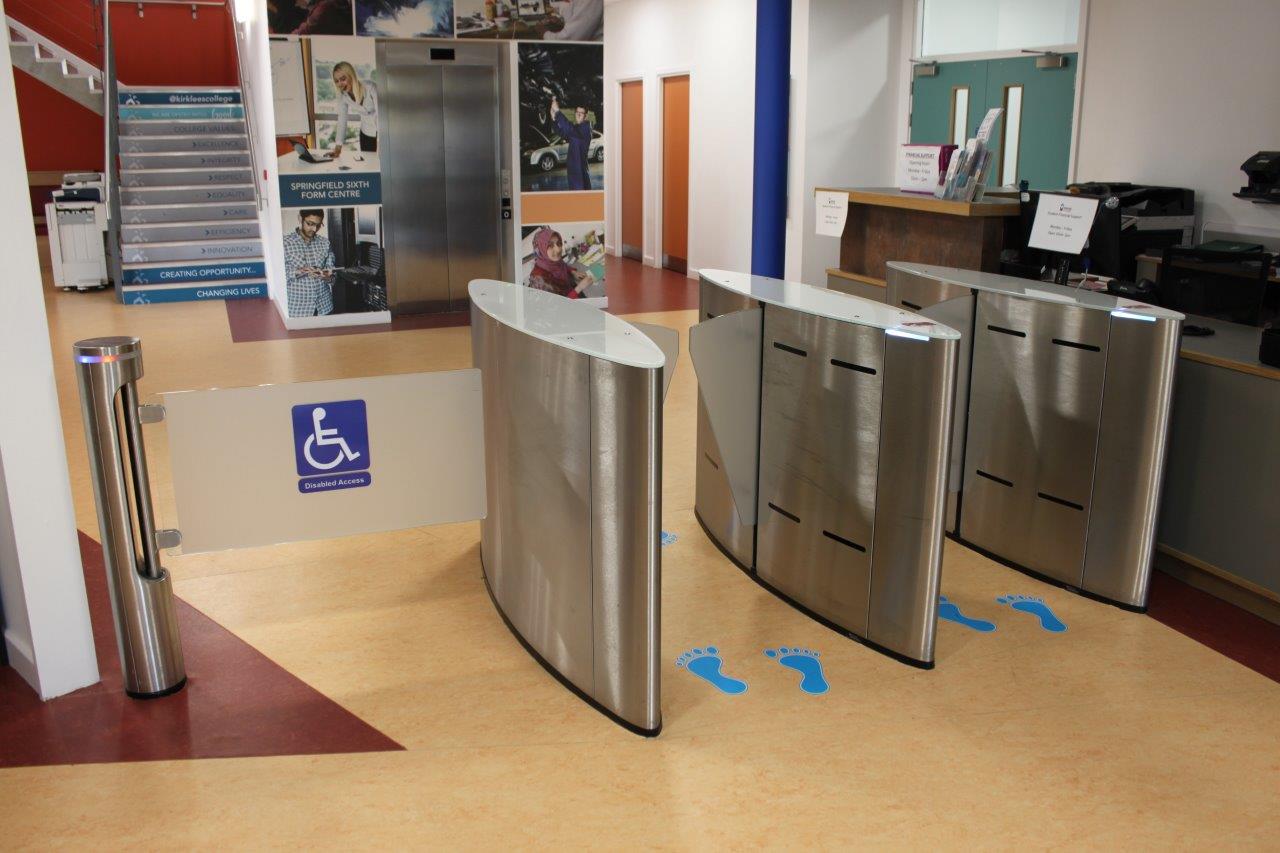
Access control systems, by their very nature, secure entrances and restrict access to certain areas, an anathema to free and open escape routes. The key challenge when there is access control on an escape route door is to ensure that doors can support lockdown procedures, restrict unauthorised entry, and still allow immediate exit in an emergency.
This is usually achieved through a combination of fail-safe locking arrangements, emergency break-glass release devices, integration with fire alarm systems and
clear and intuitive door operation. Guidance from industry bodies such as the GAI and DHF highlights that there is no single solution. Each door must be assessed individually based on its function and location.
Doors in Lockdown and Compartmentation
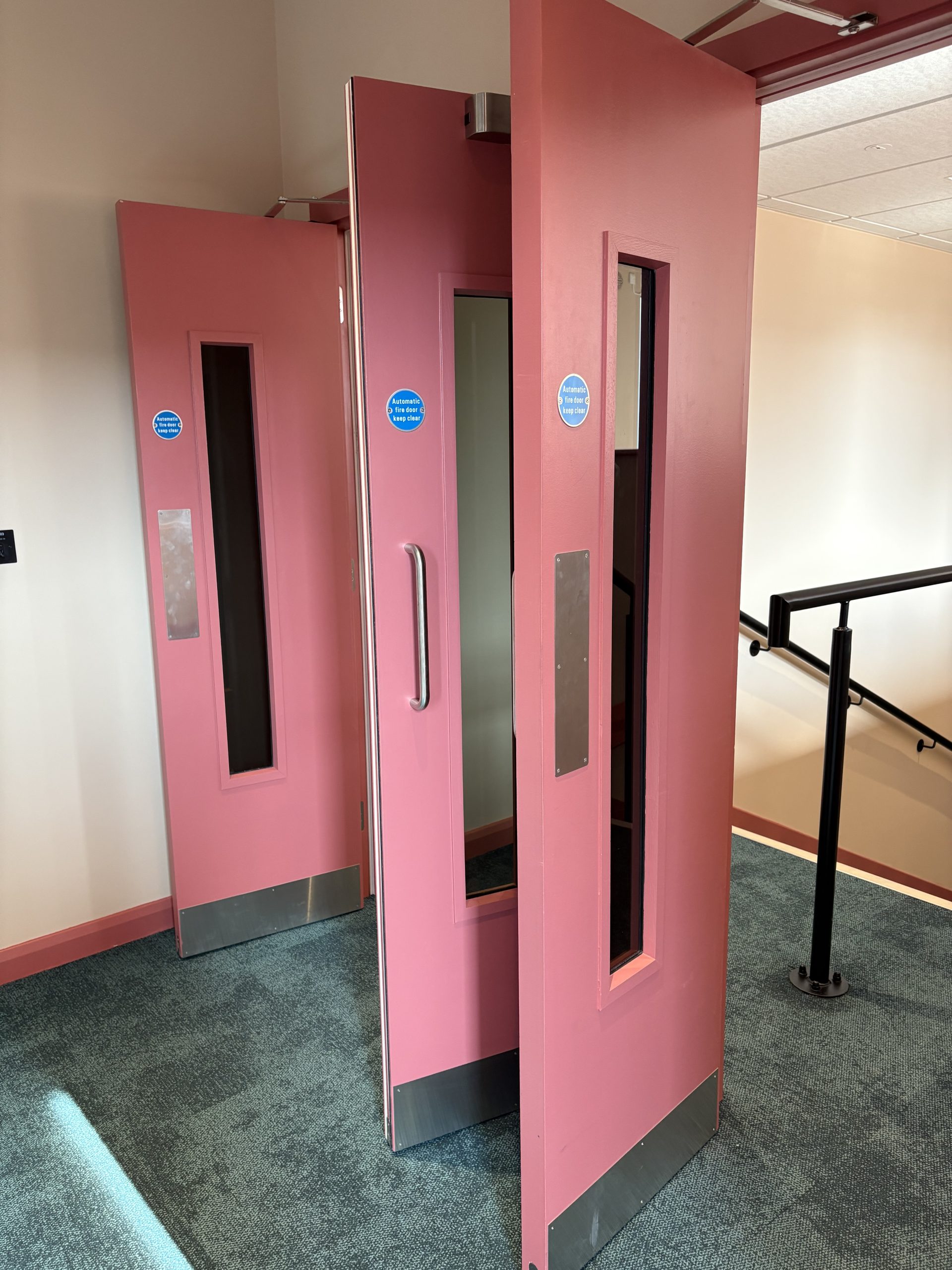
Lockdown and invacuation strategies rely heavily on compartmentation. This means being able to divide a building into secure areas and control movement between them. Obviously, doors will play a critical role in this process, securing access between zones, delaying or restricting movement, and protecting occupants who have taken refuge in designated refuge zones. In these scenarios, the performance of the door, including its hardware, locking and integration with other systems, must be part of the overall security strategy.
The Risks of Incorrect Specification
Incorrectly specified or installed door hardware can create serious issues, including:
- doors that cannot be secured effectively in the event of a lockdown
- delays in evacuation or invacuation
- conflicts between security and fire safety systems
- non-compliance with relevant standards
For Responsible Persons, this can lead to both increased risk and potential liability. So Martyn’s Law is likely to drive greater demand for third-party certified products that are documented as compliant with standards and specified and installed by specialists.
Integrating Martyn’s Law Doors With Wider Building Systems
Doors do not operate in isolation. To support compliance with Martyn’s Law, they need to work as part of a wider system, including security, fire alarms, CCTV, and access control systems. This level of integration is increasingly expected in complex or high-occupancy buildings, and this trend will only increase when Martyn’s Law come into effect.
Retrofitting Existing Buildings
Many buildings affected by Martyn’s Law are existing structures, and upgrading door hardware in these environments can present challenges. Fire door certification must be maintained. Integrating with legacy systems while meeting accessibility requirements can also be demanding.
In these cases, a site-specific approach is essential. Solutions may involve upgrading existing hardware, introducing controlled access points, or improving system integration without compromising compliance.
How Em-B Supports Compliant Specification of Martyn’s Law Doors
At Em-B, we work with architects, facilities managers and contractors to ensure that doors and access systems support both security and life safety. Our team of experts can assess existing door hardware and escape routes and advise on compliant locking and access control.
Because every building operates differently, the focus is always on proportionate, practical solutions rather than standardised approaches.
Speak to Em-B About Martyn’s Law Readiness
As Martyn’s Law moves closer to implementation, Responsible Persons should begin reviewing how their buildings perform in real-world scenarios. Doors, locks and escape hardware are a fundamental part of that process. If you would like support assessing your building’s readiness, the Em-B team can provide practical, site-specific advice. Get in touch.
This article forms part of Em-B’s Martyn’s Law guidance series for building owners, facilities managers and design teams.
You can also explore how Martyn’s Law affects doors and access control, understand compliance responsibilities, review lockdown and evacuation procedures, and download our readiness checklist to assess how prepared your building is.
FAQs on Martyn’s Law Doors
Not necessarily, but they may need to be reviewed to ensure they support security procedures while maintaining safe emergency escape.
Panic hardware is a device, typically a push bar, that allows doors to be opened quickly and easily in an emergency, even under pressure.
Panic hardware (BS EN 1125) is used in public buildings and operates with a push bar for quick, intuitive exit. Emergency escape hardware (BS EN 179) is used where occupants are familiar with the building and is typically operated by a handle or push pad.
Yes, but it must be designed so that doors can still be opened immediately in an emergency, typically via fail-safe operation and an emergency-release system.
BS EN 13637 is a standard for electrically controlled exit systems, ensuring that doors can be secured while still allowing safe emergency egress.
Door hardware controls how people enter, move through and exit a building, making it critical to both security and life safety.